
Faith & Fitness Night Recap: The Fruit of the Spirit — Christian Character Training
- Harry King
- 2 days ago
- 7 min read

Friday night at Kingdom FIT was about more than getting physically stronger. Our latest Faith & Fitness Night challenged us to think about what it means to become stronger in our character as well. Our theme for the evening was “The Fruit of the Spirit: Christian Character Training,” based on Galatians 5:22–23.
“But the fruit of the Spirit is love, joy, peace, forbearance, kindness, goodness, faithfulness, gentleness and self-control.”
At Kingdom FIT, we talk often about training with purpose. When we enter the gym, we understand that physical development requires training. Strength doesn't happen after one workout. Endurance isn't developed after running once. We improve because we repeatedly challenge ourselves, make adjustments, practice discipline, and continue showing up.
Friday night gave us an opportunity to consider a similar question about our spiritual lives: What are we doing to train our character?
Strength Is More Than Physical
The book of Galatians addresses believers who were dealing with division and the struggle between following God's Spirit and giving in to the desires of the flesh. Paul points believers toward a different way of living. Galatians 5:22–23 describes the evidence of that Spirit-led life as love, joy, peace, patience, kindness, goodness, faithfulness, gentleness, and self-control.
That became the foundation of our conversation Friday night.
You can develop an impressive body and still struggle with patience. You can become incredibly strong and still struggle to control your temper. You can improve your endurance while struggling to endure difficult people. You can become disciplined about getting to the gym while lacking discipline in other areas of your life.
Physical strength and Christian character are not the same thing.
Our discussion centered on the idea that godly character should be evidence of a life being transformed by God. The Holy Spirit works within believers, developing qualities that increasingly become visible through how we live and how we treat other people.
That's why the Fruit of the Spirit is such a powerful lesson for both adults and young people.
Which Fruit Is Hardest for You?
One of our Big Board Questions for the evening was simple:
“Which fruit of the Spirit is hardest for you?”
It's an easy question to read, but it requires some real self-reflection to answer.
Maybe love comes naturally when you're dealing with people you like, but becomes much harder when someone has hurt you.
Maybe you consider yourself peaceful until circumstances don't go according to your plans.
Maybe you're kind, but impatient.
Maybe you're faithful, but struggle with self-control.
Or maybe gentleness becomes difficult when you're angry.
The purpose wasn't to identify who was “good” or “bad.” It was to recognize where each of us still has room to grow.
That's something fitness teaches us extremely well. If your legs are strong but your upper body is weak, pretending that weakness doesn't exist won't make you stronger. You identify it and train it.
Our character requires that same willingness to examine ourselves.
“I'm Patient” vs. “I Lose My Temper Easily”
We also used a continuum that asked participants to consider where they would place themselves between two statements:
“I'm patient” ←→ “I lose my temper easily.”
That opened the door to an important conversation about emotional reactions and impulse control.
Young people today regularly encounter situations that test their patience and self-control. Anger, disrespect, frustration, peer pressure, disagreements, social media, family conflict, school pressures, sports, and relationships can create situations where emotions take over very quickly.
Adults aren't immune to those challenges either.
The question becomes: What happens between the emotion we feel and the action we take?
Christian character doesn't mean we never become angry, disappointed, frustrated, or hurt. It means we're learning not to allow every emotion to dictate our behavior.
Self-control gives us the ability to experience an emotion without automatically surrendering control to it.
That takes training.
Character Training Requires Resistance
There was a natural connection between Friday night's message and what we do every day at Kingdom FIT.
Muscles develop because they encounter resistance. If we never challenge them beyond what they're accustomed to doing, there's little reason for them to adapt.
Character is often revealed through resistance too.
It's easy to talk about patience when nobody is testing your patience. It's easy to talk about kindness when everyone is treating you well. It's easy to talk about peace when life is going exactly as planned. And it's easy to talk about self-control when there isn't anything tempting you to lose control.
The challenge comes when those qualities are tested.
That difficult interaction can become an opportunity to practice patience. The person who frustrates you can become an opportunity to demonstrate gentleness. A situation where you could retaliate becomes an opportunity to choose peace. A moment when emotions are running high becomes an opportunity to practice self-control.
In the gym, resistance isn't necessarily our enemy. Resistance is often the thing that develops us.
The same principle can apply to our spiritual development.
Love or Self-Control?
Another activity presented participants with a forced choice:
“Self-control is most important.”
or
“Love is most important.”
There are good reasons someone might initially choose either side.
Without self-control, emotions and impulses can easily influence our decisions. Self-control can affect how we speak, what we do when we're angry, how we respond to temptation, and whether we're able to remain disciplined when doing the right thing becomes difficult.
But love is also foundational to how Christians are called to interact with God and other people. Love changes how we serve, forgive, encourage, sacrifice, and respond to those around us.
The exercise wasn't simply about finding a winner. It encouraged everyone to think more deeply about how these characteristics work together.
The Fruit of the Spirit isn't presented as a menu where we choose the two or three qualities that best fit our personalities. The goal is continued spiritual development across our lives.
Training the Next Generation
An important part of Friday's conversation involved young people.
Youth today are navigating anger, impatience, disrespect, emotional reactions, and impulse control while growing up in an environment where reactions can be immediate and public.
That makes character development incredibly important.
Children and teenagers need more than instructions about what not to do. They need examples of what healthy, Spirit-led responses actually look like.
They need adults who demonstrate patience when frustrated.
They need coaches who can correct without humiliating.
They need parents and mentors who demonstrate self-control.
They need communities where kindness isn't confused with weakness and where treating people with respect still matters.
And perhaps most importantly, they need to understand that Christian character isn't something we simply manufacture through willpower. God uses the Holy Spirit to develop and train our character.
Our responsibility is to remain receptive to that work and willing to recognize the areas where we need growth.
Spirit-Filled Living Produces Holy Behavior
One of the core values behind Friday's lesson was:
Spirit-filled living produces holy behavior.
Faith isn't intended to exist only inside a church service. What we believe should eventually influence how we live.
It should affect how we speak to our families.
It should influence how we respond when someone disrespects us.
It should influence how we conduct ourselves at work.
It should affect how we treat strangers.
It should influence what we do when nobody is watching.
And it should influence how we respond when we're under pressure.
Our character becomes one of the places where our faith becomes visible.
That doesn't mean Christians will demonstrate every Fruit of the Spirit perfectly every day. Growth is a process. Just as someone beginning a fitness journey doesn't walk into the gym on Monday and become an elite athlete by Friday, spiritual maturity develops over time.
The goal is progress and transformation.
Taking Faith Into the Workout
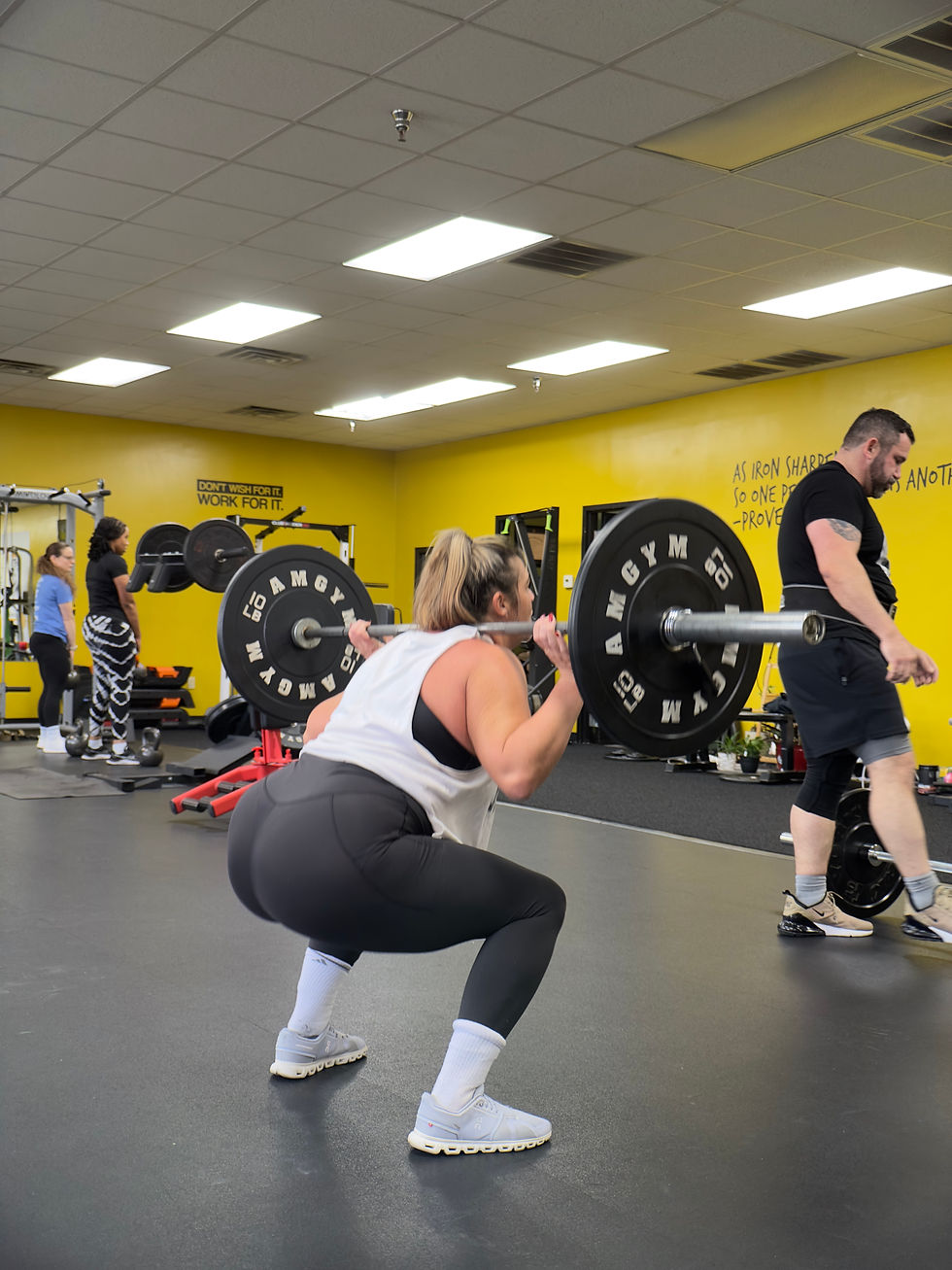
Faith & Fitness Night is intentionally designed to connect lessons like these with physical activity.
When you're tired during a workout, you learn something about yourself.
When another round starts and you don't feel like continuing, perseverance gets tested.
When someone beside you is struggling, you have an opportunity to encourage them.
When you're frustrated because you can't perform a movement as well as someone else, humility gets tested.
When you're capable of pushing harder but want to quit, discipline gets tested.
The workout becomes more than calories burned.
It becomes an opportunity to practice some of the same principles we're discussing.
That's part of what makes Faith & Fitness Night different. We're not simply adding a Bible verse to a workout. We're exploring how the principles of our faith can influence the way we train, live, lead, serve, and interact with one another.
What Friday Night Reminded Us
Friday night's message left us with a challenge that extends far beyond one evening at Kingdom FIT.
Ask yourself again:
Which fruit of the Spirit is hardest for me?
Don't answer based on which one sounds best. Think about your actual life.
Think about how you respond when you're tired.
Think about how you react when someone disagrees with you.
Think about how you speak when you're angry.
Think about how you behave when plans change.
Think about how you treat someone who can't do anything for you.
Those moments tell us much more about our character than what we say about ourselves.
Once you've identified an area that needs development, don't become discouraged by it. Train it. Pray about it. Practice it. Become intentional about it.
If patience is difficult, look for opportunities to practice patience.
If self-control is difficult, become more intentional about the space between your feelings and your reactions.
If kindness is difficult, deliberately look for opportunities to serve.
If love is difficult, ask God to help you see people differently.
Spiritual growth, like physical growth, requires intentionality.
Faith. Fitness. Purpose.
Thank you to everyone who joined us Friday night at Kingdom FIT Harrisburg. The workout was important, but the conversations, reflection, encouragement, and community were what made the night special.
Our goal is to continue creating an environment where people can become stronger in more ways than one.
We want stronger bodies—but also stronger families.
We want greater endurance—but also greater patience.
We want discipline in our workouts—but also self-control in our lives.
We want people who can lift heavier weight—but who also understand the strength required to demonstrate love, kindness, goodness, faithfulness, gentleness, peace, and joy.
That's what Faith & Fitness Night is about.
Because ultimately, we're not simply training for what happens inside the gym.
We're training for how we live when we walk out of it.
Faith. Fitness. Purpose.
Kingdom FIT Harrisburg — Every Body. Every Journey. One Kingdom.


Comments